

Is being assertive too ‘male’ for women? Do you think that running seminars in assertiveness is selling women short?
I write and deliver courses for women to add to their confidence. I also coach women in developing their careers. I try to keep as up to date as I can and read avidly on my subject.
I read something recently which pulled me up short and caused to take a serious look at what I do professionally. I’m quoting out of context but it’s the essence which is important. I was reading some research by a serious academic writing about communication styles and she said, in effect, that teaching women to be more assertive could be seen as teaching them to be more like men.
If you’ve read much of this blog you’ll know this is emphatically what I don’t want to do, yet I do help women behave more assertively.
So am I being hoist by my own petard here? It has caused me to seriously reflect on what I am actually doing when I work with women to feel more in control and to behave more assertively. Am I teaching them to behave like men or am I helping to increase their confidence in handling potentially difficult or fraught situations, and in dealing with men in the workplace?
A Short History of Assertiveness
I think it might help to define terms at this point.
1950s Assertiveness
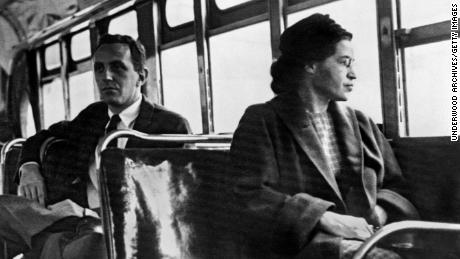
Rosa Parks seated toward the front of the bus, Montgomery, Alabama, 1956. (Photo by Underwood Archives/Getty Images)
Obviously assertive behaviour has been around since the year dot, however, we can probably date it for the purposes of this post from the 1950s. In recent history the Civil Rights Movement in the US in the 50s adopted many assertive principles, when they respectfully and peacefully challenged the discrimination laws in the southern states.
They calmly asserted their rights,. For example, in Woolworths, there were two lunch counters, one for whites, one for blacks. Black people went to the ‘white’ counter, and asked to be served. And vice versa.
They refused to leave and used what became known as a ‘stuck record’ technique, ie repeating their request until they were arrested. Perhaps the most famous example of this is Rosa May Parks, pictured above.
1960s Assertiveness

The actual term assertiveness was probably coined somewhere around the 1960s when psychologists began to study human behaviour in the same way that anthropologists studied animal behaviour. Books like ‘I’m OK, You’re OK’ by Thomas Harris were very popular, and different communication styles were looked at in a more academic way.
This being the 60s, the research was very male centric as there was no serious challenge then to the notion that being male was the norm.
1970s Assertiveness

In the 70s the women’s movement took up the idea of assertiveness and used it as a means of growing in confidence to possibly play men at their own game. Movements like ‘Reclaim the Night’ sprung up when women were ‘taught’ to walk tall, not look like victims and have assertive body language.
Late night walks were organised with the aim of dispelling victim fear among women. I have no problems with being identified with that. Were they being taught to be like men? Or were they, could it be argued, being untaught a way of behaving caused by the violence of men?
1980s Assertiveness

It’s in the 80s that I think it all went wrong with assertiveness training. The eighties were generally a time of me me, greed is good etc and predictably courses in assertiveness followed the fashion. I had my first encounter with assertiveness training then, a one week residential course with the Probation Service, and I did not like it. I thought it was appalling.
It was awful, very much a case of ‘I’ll win and you’ll lose.’ Is this a male way of thinking? The course leader was male, all of the recommended reading was written by men, and most of the participants on my course were male. Research shows that when men talk amongst themselves it tends towards competitiveness.
This way of looking at assertiveness was all about winning, competing. In the eighties much of what we had learned about good communication was also appropriated by sales trainers and used to establish a false rapport to sell more. I saw it more as a manipulative technique rather than a useful tool. Assertiveness deservedly got a bad name during the eighties.
Combatting Abuse with Assertiveness
The next time I seriously began to think about the concept of assertiveness was a few years later when working with women in abusive situations. The issue boiled down to one of self respect: the personal issue, I mean.
Obviously there is a whole raft of material and theories on why men abuse women which has little to do with women respecting themselves. I’m talking about the link between self respect and choice of partner here. For many reasons these women often had very little self esteem. Helping them to be more assertive in their daily lives increased their self esteem, their confidence, and consequently their ability to deal with the situations they were in.
We did not work with them to behave like men, rather recognise the impact that male behaviour had had on them, and to counter this.
Some years ago, shortly after setting up my own business, I was asked at short notice if I could take over an assertiveness course within an organisation as the previous person had left suddenly. I agreed but was shocked by the course details presented to me. The previous tutor had been male, had actually been a car salesman in a previous life (nothing wrong with that, just filling in the background), and his course was firmly rooted in the 80s. You won or lost, according to how you played the game.
Needless to say I designed my own programme, which incidentally was well received by both men and women. Eventually I asked if we could rename the course because the term had become so debased. We called it confidence building. I have never taught assertiveness techniques as such, instead I am interested in what stops people feeling that they can assert themselves in certain situations.
Definition of Assertiveness
This is the definition of assertiveness I work to.
Assertiveness is about respecting yourself, valuing what you bring to the table, and having the confidence to speak up. Assertiveness is about respect for other people, too.
It’s not about being aggressive, winning by putting the other person down, or staying quiet and being passive or any combinations thereof. Essentially it is about extending that level of respect to others. You have the right to say what you feel and believe honestly, and others have that that right, too.
So on reflection, no, I don’t think what I do is about teaching women how to be like men. I think it’s about self respect, self esteem, and confidence and valuing self and others. And that doesn’t belong to any one gender, surely?
RenewYou, My Tried and Tested Career Booster!
RenewYou has helped thousands of women make positive and lasting change in their lives. I deliver it one-to-one as part of a bespoke coaching package for women looking to move into leadership, to progress their career, or who wish to be the absolute best version of themselves.

Posted on January 16th, 2021 by Jane


