
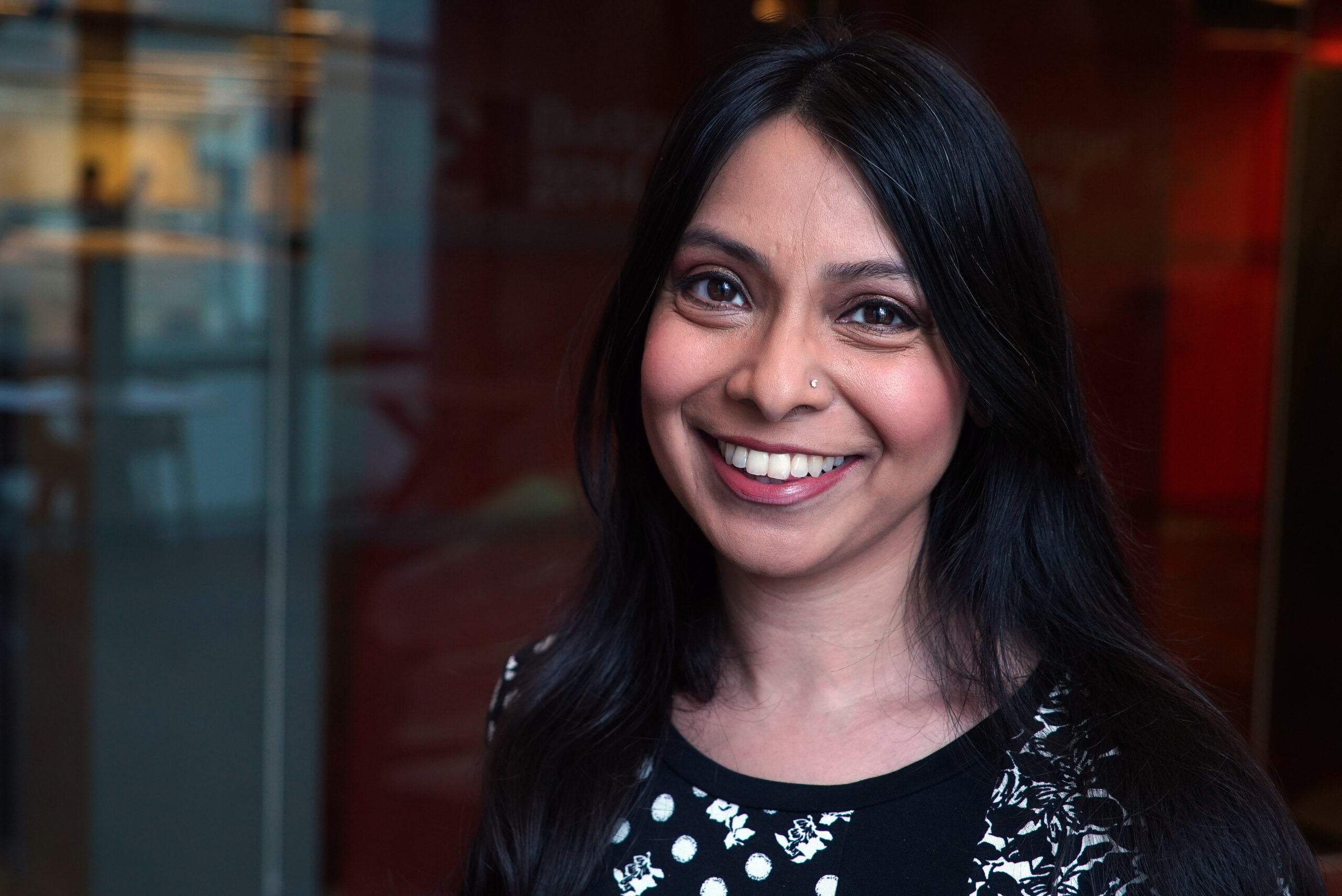
May I introduce you to an inspiring woman, Dhruti Shah. If you’re an avid BBC listener/viewer, like me, the name Dhruti Shah may well mean something to you. Until the end of last year Dhruti worked for that august institution as a journalist/reporter, but after thirteen years is taking a well-earned sabbatical and then embarking on a freelance career. She calls it her ‘Year of Adventure’, which I love.
We first began talking through our mutual admiration of Sangita Myska, another inspirational woman I’ve had the pleasure of interviewing. Sangita is a role model for Dhruti and many other female journalists, and I’m confident that Dhruti herself is also an inspiration to other women in the world of writing.
Dhruti, thank you so much for sharing some of your experiences and wisdom with me. I am intrigued (and admiring) of the fact that you have taken the bold step of taking some time out. What prompted you to take a sabbatical now?
I loved doing my job but it was time to try something different. I’ve spent so long telling other people’s stories, I decide now was the time to take ownership of my own story. I wanted to take some time to rest as I’d actually got quite significant burn out and I also wanted to bridge the gap between journalism and the observing and reporting of what we see and actually experience life for myself.
Multipotentialite
I came across this term – multipotentialite – and it’s what I want to be. It’s someone with lots of different interests and specialisms – and now I have coaching skills under my belt and am doing a lot more consulting and speaking and facilitating and more. And I’m excited about that.
I’ve acquired a new word – multipotentialite. Thank you! Can I take you back to your early years? I know you went to Oxford University; was that typical for pupils at your school? Who encouraged your education?
I was state-school educated and the simple answer would be no, it wasn’t typical for students at the schools I went to to go to Oxford. I think in my year – there were two of us. I went to Oxford University and then another girl went to Cambridge. But I didn’t even know when I applied that you tend to get prepped for the interview stage. I mean I had a chat with my English teacher and that was it. That was my prep.
Oxford University
But I applied because I thought it was one route of becoming a journalist (clearly things have changed nowadays). My family was very supportive when it came to me following paths that could get me to my career dreams, and education was one way of that.
When did you realise that journalism could be the career for you? How did you get into it?
I fell in love with the idea of telling stories and reporting when I was a child. And I decided I was going to become a journalist and nothing was going to stop me. I did everything I could to become a journalist – including badgering the local paper for work experience, writing a column about being a state school student at Oxford University, writing for nationals, setting up a magazine for the borough I lived in and more…
I took a break several years ago and travelled to South East Asia and speaking to people there reminded me how much I loved sharing the stories and perspectives of others. When I came back to the UK, I ended up working for a travel magazine. I then ended up getting a bursary and doing all my print training in local newspapers – at the Harrow and Wembley Observer.
Life on a Local Paper
I loved local paper life. You learn about accountability to the community in which you work. It’s the best training you can have. I then spent some time at an independent production company with some amazing storytellers and then became a journalism trainee at the BBC. And that’s where I’ve been for the last 13.5 years.
I’ve had a brilliant run in terms of my storytelling and I’m grateful to everyone who gave me the privilege of sharing their stories. I broke digital records; I learned about strategy and I got to work overseas. But when the pandemic happened, a lot of things were crystallised for me and I realised it was time to have a new beginning.
From those beginnings you are now involved in four prestigious fellowships. Can you tell us what they are, (and what being a ‘fellow’ involves) how you became involved and why they are important to you?
I have four fellowships. I am an Ochberg Fellow with the Dart Centre for Journalism and Trauma; A Rotary International Peace Fellow; A John Schofield Trust Fellow and I have an honorary fellowship as a journalism practitioner with the Centre for Journalism at the University of Kent. I was selected for all of these and I’m very proud of them.
Different Tribes
They all mean I am part of different tribes with different specialist interests. They all involve different things – that’s the beauty of a fellowship – none of mine are restrictive. I get to be as interdisciplinary as I like. The Kent University one is about teaching the next generation; the trauma one is working and collaborating with my peers; the Rotary one is about understanding the world beyond journalism (I’m one of very few journalists selected – it’s mainly humanitarians and development experts), while the John Schofield Trust one is about building an industry-wide network and making newsrooms far more inclusive. I’m also a Board Trustee for this small charity as I believe in the core values very very much.
Writing a Book
During the pandemic, like many others, you decided to write a book, partly out of your desire to demystify and explain. Unlike many others you actually got it published and I know it has won at least one award. What was that process like?
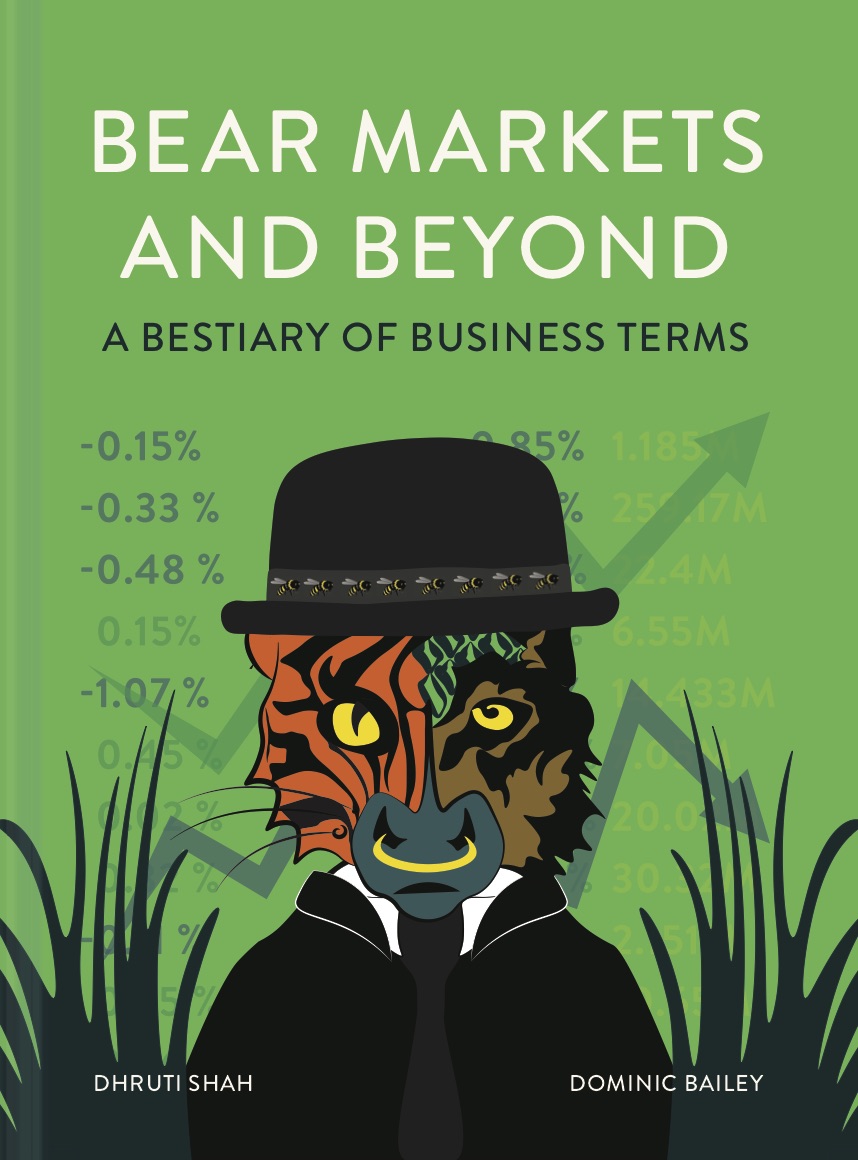
That’s not quite the case. I actually began the book journey before the pandemic. The book – an illustrated financial literacy guide called Bear Markets and Beyond: A Bestiary of Business Terms was published in the pandemic but the journey started in 2016, so several years earlier. We were offered the book deal in 2019, way before anyone realised quite what would happen not that long after.
Book Award
But there were times when the illustrator – Dominic Bailey and I – thought that it might not happen. It was a difficult journey to get it published but we had faith in it and knew that it would help people of all ages find business fun. We’re lucky our publisher took a chance on it even though it didn’t fit their usual remit. It won Short Business Book of the Year at the Business Book Awards in 2021 and it’s in schools and libraries globally, which was always the goal.
Do you think your background, (for example, you grew up as a Jain in a close-knit family) has influenced the direction your writing has taken in a positive way?
I think growing up in a minority faith has definitely helped me become a nuanced writer and someone who tries to understand the details of the stories I cover. It’s a peaceful faith and again, if you look at the stories I cover, a lot of them do look at the issue of conflict resolution in all manner of subjects.
Who has most inspired you in both your career, and personally? Who are your role models?
My family inspire me both in my career and personally. There’s no distinction. They are always at the top of the tree. I have various role models for different parts of my career but we’ll run out of word space.
What has been the best piece of advice you’ve been given?
Believe in yourself and take ownership of that which you create.
And what is the best piece of advice you would like to pass on to women thinking of following a writing career or a career in broadcasting?
The same. Believe in yourself and take ownership of that which you create. Maybe I’ll add also be willing to bring others along with you for the ride.
Life is not equal for women in anywhere in the world, and it is more unequal when it comes to women of colour. Is there one piece of legislation, or one societal change that you would like to see that could begin to address this imbalance?
Ethnically marginalised groups are not homogeneous, and I think it’s important for society to take that on board.
You’re almost halfway through your year of adventure and sabbatical. Have you had any thoughts yet about what the future might hold for you? What’s next?
The year of adventure is just the start. I have faith it will work out. What it is, I’m still figuring out. But I have a strong foundation built up over many many years and so now it’s a question of finding amazing people to collaborate with. I’m not going to put any limits on what could be next.
The Year of Adventure
So far the year of adventure has led to fellowships, getting a qualification in understanding Nature-based Solutions, embarking on training to become a relational dynamics coach, getting at least two poems selected for publication, speaking at events and being asked to consult on major projects. Who knows what is next?
Finally, if you could have an alternative career, absolutely anything what would you choose?
I did dabble in children’s publishing when I was younger. I have a lot of respect for children’s books. But also I don’t know, as long as it pays the bills and allows my curiosity to fly free, it’s probably a career that doesn’t exist yet.
I’m really looking forward to finding out what you do next. Thank you, Dhruti, for sharing your story with us. You are most definitely an Inspiring Woman.
If you’d like to keep up to date with Dhruti you can find out more at www.dhrutishah.com
RenewYou, My Tried and Tested Career Booster!
RenewYou has helped thousands of women make positive and lasting change in their lives. I deliver it one-to-one as part of a bespoke coaching package for women looking to move into leadership, to progress their career, or who wish to be the absolute best version of themselves.

Posted on March 17th, 2022 by Jane


