
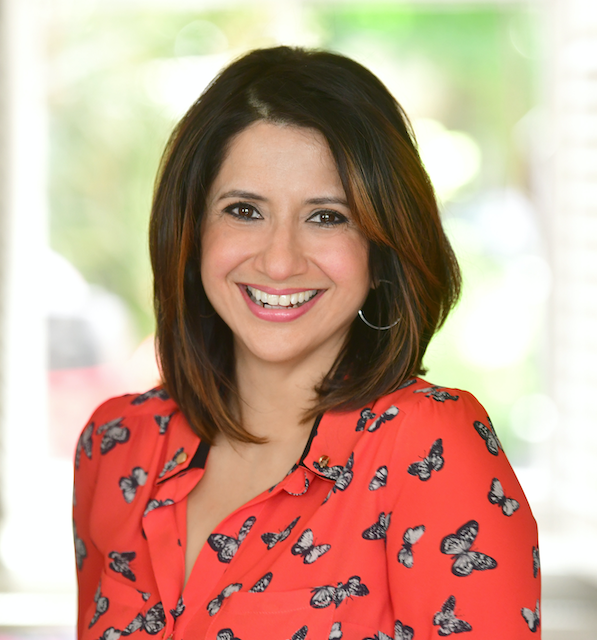
I first heard of Sangita when listening to an episode of BBC Woman’s Hour, a daily, highly influential radio show in the UK on BBC Radio 4. Both the regular presenters are leaving (Jenni Murray has already left and will be replaced by Emma Barnett, coincidentally both of whom have been interviewed by me…) and Jane Garvey (not interviewed by me although she has eaten my home made cake, which might be why…) leaves at the end of the year.
The programme has been trying out some new voices over the last few months and there have been some fabulous women on. I heard Sangita at the end of October and was genuinely enchanted; she sounded so fresh and enthusiastic. Her voice was smiling, and it made me smile, too. I tweeted about her and she responded. It seems to me that she replies to everyone with courtesy and interest, although if she gets the Woman’s Hour job that may become impossible.
Interview with Sangita
Jane: Sangita, thank you so much for taking the time out to talk with us, it is very much appreciated. How do you describe what you do?
Sangita: First and foremost, I’m a journalist. Cut me in half and you’ll probably find that imprinted on my spine. I know that’s embarrassing, but it’s true! I’ve spent over 20 years telling people’s stories, getting answers to their questions and holding authority to account. Having that role is a privilege. There was a point in my career when I could have gone down the entertainment presenter route and though it’s much more glamorous (and better paid), I found it unfulfilling.
News is a tough environment – especially for women – but it’s been a hell of a journey. I’ve worked as an undercover journalist, worked in breaking news, reported from Britain and abroad, led ground-breaking investigations, got Governments to make U-turns on flawed policy that adversely affected vulnerable people and I’ve reported everything from Royal Weddings to riots, The Olympic games to the Old Bailey. I’ve made documentaries and come up with original programmes and formats for BBC News, Radio 4 and BBC One.
Why Become a Journalist?
What attracted you to journalism? Do you remember what you’re your very first job was? Did you learn any skills there that have stayed with you?
My voyage into journalism was really one of discovery. I studied Law and Politics at University – because at eighteen years old I believed I could help change the world for the better through some kind of civil rights role. I’ve always had a strong sense that creating a level playing field in society is one of the most important things we can aim for, because by doing that we can help everyone fulfil their true potential, thereby creating happier individuals that will make up a happier, cohesive and productive society.
Equality must be at the heart of that. I had all the exuberance of a teenager and, while that’s essential to drive change, if I met my younger self now, I’d probably find myself quite annoyingly over-optimistic.
The Law Beckoned but…
There was another element and ultimately decisive issue though: which was the financial reality of my family life. We were far from wealthy. I knew that if I practiced the law then I’d want to be a barrister. At that time, by and large, if you didn’t have wealthy parents (I didn’t) it was impossible to finance that career path.
So… I turned to journalism. I wrote to every magazine, programme and newspaper I could think of and asked for work experience. My first ‘break’ was on Cosmopolitan Magazine. They didn’t pay me – but I got 2 weeks work experience over Christmas, which turned into 4 weeks. I borrowed my sister’s work clothes, skipped lunch as I couldn’t afford it and opened endless bags of mail.
I was like a lost puppy. Barely anyone spoke to me for the first couple of days but then, two very nice members of staff took pity on me and did things like let me follow them around and answered my questions.
The Devil Wears Prada?
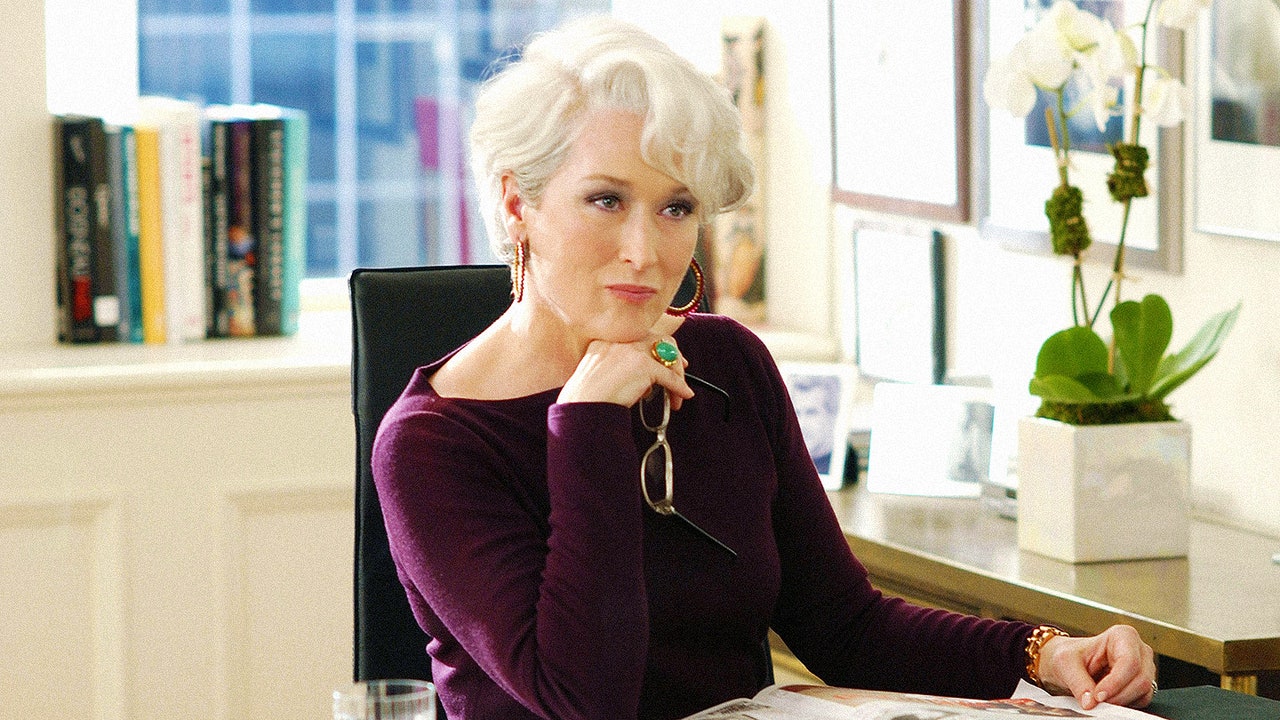
You know that movie The Devil Wears Prada? It was a bit like that. But with those acts of kindness, my direction was set. I then built up every bit of experience I could anywhere that’d let me in. After graduating, I won a place – via a national competition – onto the BBC’s News Trainee Reporter Scheme.
Jane: Where did you grow up, go to school, and how was it being a young Asian woman in the Britain of your youth? I am particularly picking up on a tweet you put out in relation to the election of Kamala Harris (Vice President Elect of the USA). I can’t tell you how much I relate to this sentence “they assumed things about her intelligence” because she wore a sari and had an ‘accent’. I feel there’s a story there.
Ahhh that tweet, Jane! You are eagle-eyed. My parents came to Britain from East Africa, Tanzania to be exact. The country had been a former British Colony. My grandparents on both sides had moved there for work. It was hard for Indian professionals to get work in India.
There was mass unemployment; the world economy was fixed by colonial powers, so that the West boomed at the expense of its colonial subjects (this was true of all empires including those of the French, Belgium, Dutch etc). Indian professionals who needed work sometimes had little choice but to agree to go to other colonies to work for British plantation owners and in public hospitals. That was my grandparents.
My parents were born in Africa and so was I. My family was very pro-Tanzanian Independence and my father worked actively towards it. He was a lawyer and after independence he, along with others, helped to deracialize the British criminal code which was stacked against indigenous Africans.
Tanzania
We stayed in Tanzania for as long as possible after independence from the British, but threats against Indians in neighbouring Uganda began to spill over into otherwise peaceful Tanzania. The final event was when the family home was surrounded by men claiming they had guns – wanting money. It was a rough period in Tanzania’s history. I went back to Tanzania in 2016 and it’s a beautiful, peaceful country full of wonderful people. The instability in the 1970s was an unfortunate phase – I hope very much it fulfils its true potential.
Very reluctantly my parents had to admit to themselves that it was unsafe to stay. I don’t remember leaving, I was too young, but by all accounts, it was a case of Mum and Dad gathering up what little they could in a few suit cases and leaving everything else behind. Dad was in Government service so we didn’t own a property (we lived in public housing) and the Tanzanian economy was such that there were long periods where he wasn’t getting paid (mum was a homemaker then). My parents arrived in the U.K. with what they could carry – for me, they brought my pink baby blanket with a teddy bear on it.
My Mum
My mum is, in many ways, the heroine of our story in England. She was beautiful, inside and out. Her father did not prioritise her education and she didn’t have any formal study after the age of about 12 or 13. She was thrilled to be in England. She considered it freedom: she could work for the first time, she paid for her own English lessons and studied at night for her O-levels while raising three kids.
I distinctly remember her taking two or three buses to work – in the bitter winters; she’d come home frozen. She did whatever job she needed to – selling jewellery door to door in central London, stacking shelves, clerical work, and at one point she became a part-time benefits officer, working on her own, on one of the toughest estates in London. I remember all 4 foot 10 inches of her, dressing in a sari and heading off to work.
Kamal Harris Quote
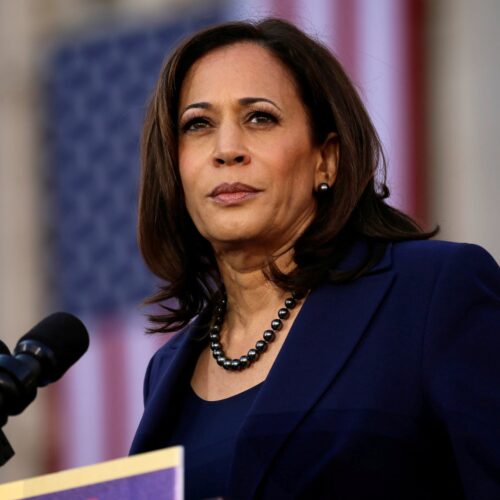
That tweet by Kamala Harris reminded me of how people would often talk over my mum and assume she was stupid because she had an accent and wore a sari. It was awful to watch and as I got older I would literally intervene by saying
“I’m sorry but this is my mother, she’s worked in Britain for years, paid her taxes and speaks perfect English – please talk to her directly. “
In spite of her achievements she wasn’t a naturally confident woman. She’d sometimes say “I’m not clever”. I’d always correct her “No, mum. You are clever – you were deprived of a proper education – that is not the same thing”.
“I’m thinking about her and about the generations of women – Black women, Asian, white, Latina, and Native American women throughout our nation’s history who have paved the way for this moment tonight. Women who fought and sacrificed so much for equality, liberty, and justice for all, including the Black women, who are too often overlooked, but so often prove that they are the backbone of our democracy.
Kamal Harris quote
My Father
My father was an intellectually brilliant man (possibly the cleverest I’ve ever met) but he struggled with family life. Leaving Africa broke his heart and he never recovered. When we arrived in London we experienced terrible racism: it was hard to find a home (eventually a very kind Polish-Jewish émigré rented us two rooms in his house in Willesden Green) or jobs. My father could not get a job as a lawyer – in spite of his excellent qualifications – and had to work his way up from the bottom aged 40. We were spat at, regularly called the P-word, and dad narrowly escaped with his life after being attacked in a pub. Our house was attacked, too, on and on it went.
We also had some very good experiences, so it certainly wasn’t all bad; but overall, I’d say it was tough. I think Britain is certainly a more welcoming place now, which is a wonderful thing to see.
True Grit
My mother dealt with it all with extraordinary grit and without a shred of anger. She really was incredible. Mum would tell us over and over how lucky we are to live in Britain, how much she adored the Queen and how we had, above everything else, the gift of a state education. She was the kindest, most compassionate woman I have ever met.
My dad had severe mood-swings and it was my mum that bore the brunt of it. He’d also get very unwell and it meant he couldn’t work for long periods, so it was my mum’s relatively low paid work that kept us going. She coped amazingly well and had the most fantastic sense of humour. Money was very tight: I know what it means to fear the bank fore-closing on your home, the embarrassment of using an electricity key and the worry of paying the bills. Its driven a huge amount of my work and keeps me completely grounded – and probably a bit fearful to be honest.
Mum never called herself a feminist – but I was taught feminism, by her, through example.
Journalist of the Year & Other Awards
You have won many awards and been nominated for some very prestigious ones. Women, in general, are not so good at blowing their own trumpets, but we have to be if we are to get ahead at work. How did the awards come about, does someone else nominate you or is it self-nomination? Which one has meant the most to you?
I always feel embarrassed talking about awards. I wasn’t raised to blow my own trumpet – many women aren’t. But you’re right, we all need to get over that. There are three I’m very proud of: Best Current Affairs podcast at the British Podcast Awards 2019: It was for the Grenfell Tower Inquiry Podcast for BBC Radio 4. I was the sole podcast reporter covering every day of Phase One’s complex and distressing evidence. I sat with the bereaved, survivors and lawyers every day. Their compassion, brilliance and determination was a privilege to witness.
Before that, I own Journalist of the Year at Art, Culture and Theatre Awards (ACTAs) 2017. I received a Special Citation for my documentaries A Family Without a Child about the experience of trying for a child but never succeeding and The Secret Lives of Carers, BBC Radio 4 in which we broke stories about the abuse suffered by both domiciliary care workers and elderly people.
In 2008 I was named among Europe’s 50 Most Influential People of 2008 by European Voice Magazine, for the undercover investigation I led into child trafficking across EU borders for BBC TV’s News at Ten & BBC World. The report was credited by the UN for triggering the creation of the United Nations Global Initiative to Fight Human Trafficking. I was nominated by colleagues or views for all of these awards. I need to get better at entering myself for these sorts of things though – but I’m usually too busy!
BBC Woman’s Hour – Radio 4
Congratulations, Sangita, that is SO impressive. You may not want to talk about this but… Woman’s Hour has a fantastic pedigree. *How much difference to your career do you think it will make if you are asked to do it?
It’s hard to know. Obviously, its high profile and has an extraordinary heritage. If I land the gig, it’ll be a dream come true. I’ve listened since I was very young. When my best friend at school got pregnant at 15 I knew that we needed to call the Marie Stopes clinic because I’d heard about their work on Woman’s Hour. The job brings huge responsibility because the audience feels real ownership of it – so I’m glad that I was given such a warm welcome.
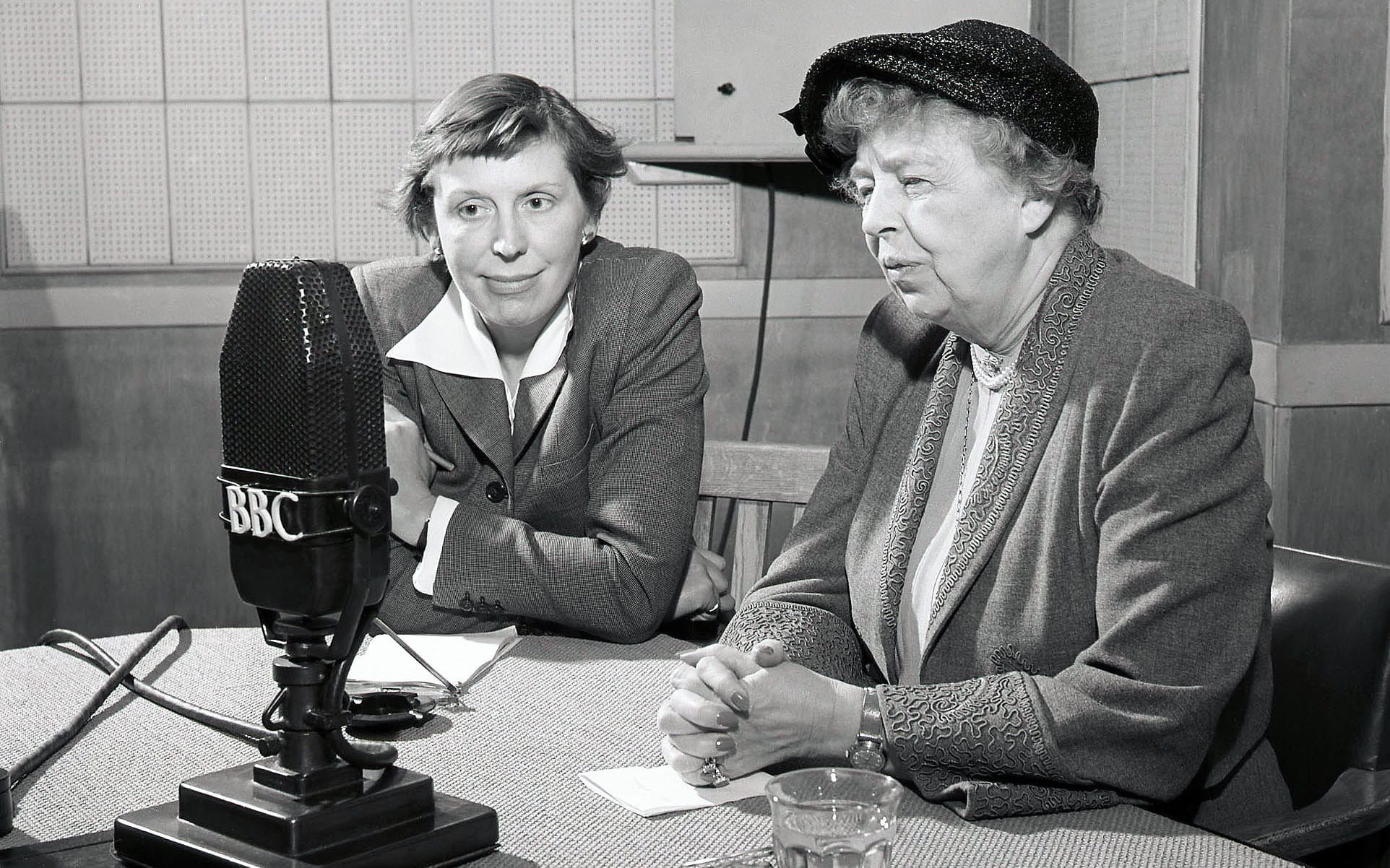
I love Women’s Hour but given that everything can change and improve, what new direction do you see for the show?
I think the all programmes should evolve over time to reflect their audiences and explore new territory. The trick is to find new audiences without alienating loyal listeners. It’s not easy. What I’d bring is a very strong journalistic background; the experience of being a British ethnic minority woman and all the richness that that has added to my life and to my perspective.
And Jane, as you noticed, I LOVE TO LAUGH. I’d ensure Woman’s Hour continues to be a warm, inclusive and welcoming place for all women with all points of view and lived experiences.
What has been the best experience of your journalistic career to date?
There have been so many. The biggest thing is that people, ordinary people, have let me into their lives and trusted me to tell their stories.
Domestic Abuse
If you were going to make me pick just one experience I’d say it was my series of reports from a Domestic Abuse refuge for the Today Programme. They were credited with by Women’s Aid for getting the Government to do a U-turn over the funding of Refuges.
The proposals would have slashed vital funding and seen specialist units potentially handed over to general housing providers. I’m incredibly proud of the women who spoke to me, the refuge workers and that work. There has to be a second as well (sorry!).
Undercover Investigations
I also led the first undercover investigation in child-trafficking across UK boarders for the BBC 1 News at Ten and BBC World TV. You can see the report on You Tube. That report helped the UN Office of Drugs and Crime clinch a deal to create a specialised anti-trafficking fund.
And the most challenging?
I’d say working undercover during the series Lifting the Bonnet for BBC 2 in which we investigated car crime and consumer fraud in the motor trade. There is was always the fear of getting caught – and as a reporter you are very vulnerable.
There was a particular time we were filming a very successful bunch of gangsters Turkey. Me and the producer were cut off from the rest of the team. You can see a bit of footage of it on my showreel which is on You Tube. I look insanely cheery in it – totally over compensating – but it was terrifying. If it had gone wrong we could have been badly hurt or worse.
Role Models
Have you had a mentor or role model? Who has been your chief supporter/cheerleader? Who do you most admire in the field of journalism?
I haven’t really had a mentor, which has been one thing I would change if I could. I actually mentor quite a few women though! Although I spend my time on air, I’m actually a quite a shy person – the friends I have I’ve known for years and barely any of them are in the media. I don’t book coffees with the bosses etc and I if I could change one thing about my personality, it’d be that.
However, without a doubt my greatest role model and cheerleader has been my late mum. There are so many people I admire – not just journalists. I can’t list them all but here are a few – my great aunt Tara who founded the first women’s hospital in Maharashtra, India, married the love of her life (a poet) against her father’s will, and who was imprisoned for her role in the Indian independence movement.
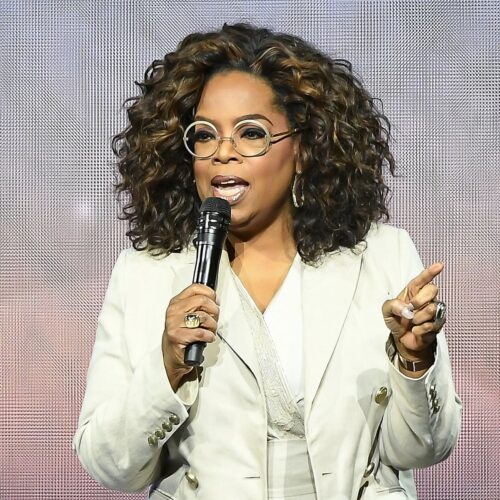
Outside my family, Oprah for being one of the best interviewers in the world AND a fantastic role model, Ritula Shah the superb presenter of The World Tonight and a huge champion of other women, Malala Yousafzai, Maya Angelou, Barak and Michelle Obama, RBG, {Ruth Bader-Ginsberg} Mahatma Gandhi, Rosa Parks, Martin Luther King and every single woman who has worked for equality name that I don’t know and has been lost to history.
Advice for Would-Be Journalists
What advice would you give to any woman thinking of a career in journalism?
Do it. The industry needs you. But, it’s tough – so be passionate, work hard, your job is to tell the story not to be the story. If you want to work in News then grow a thick hide but always be kind. Your career is a marathon not a sprint, and always help other women.
Keep on top of technology and don’t think of it as a 25-year span; the industry has changed. Most people now enter it for about 15 years and do something else, so keep one eye on the future.
And finally, if you could choose any career to have, at any point in history, what would you choose?
I’d listen to my late mum and be a doctor. I’d go back in history and I’d try to follow in the footsteps of my great aunt Tara, and revolutionise healthcare for women. For example, far too many women still die of female cancers (including in my family) because women’s preventative healthcare is not prioritised in the way it should be. I’d also campaign to raise the wages of nurses, health assistants and care workers. These professions are dominated by women and under-paid. Up the revolution, sisters! (I think I may still be as annoying as I was when I was 18).
I don’t think you are! Hang onto that enthusiasm. Thank you so much for this interview, Sangita. I am keeping my fingers crossed for the Woman’s Hour job. If it doesn’t happen, (they would be mad) I have no doubt that you are going to have a long and illustrious career that would make your mother beam with pride.
*Update: Sangita didn’t get the Woman’s Hour role; I feel very strongly that has left her free for an even more interesting challenge. Look out for news of her. I predict she will go far.
Sangita’s Wikipedia entry is here.
RenewYou, My Tried and Tested Career Booster!
RenewYou has helped thousands of women make positive and lasting change in their lives. I deliver it one-to-one as part of a bespoke coaching package for women looking to move into leadership, to progress their career, or who wish to be the absolute best version of themselves.

Posted on December 21st, 2020 by Jane


