
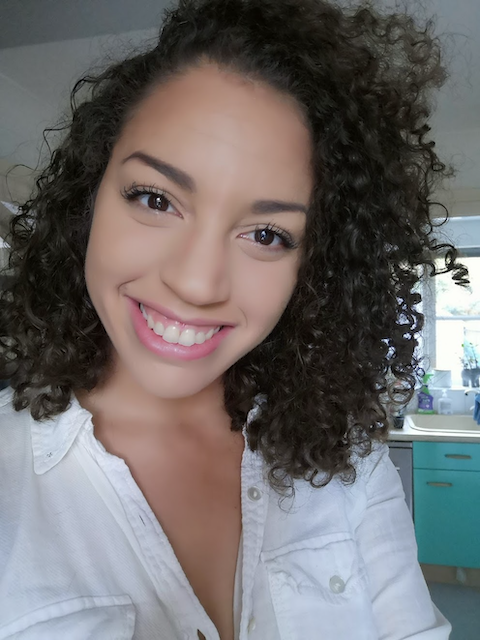
Yazzie Woods is a junior doctor in the NHS and I was really keen to hear more about her experiences of working in these strange and, frankly, frightening times. In the interests of full disclosure, I should say that Yazzie is my niece, the daughter of my brother, so I know her much better than I do most of my interviewees. (I haven’t normally changed their nappies.) I think you’ll enjoy this interview. I was particularly interested to read that the outpouring of love for the NHS has caused everyone in the organisation to be more caring and supportive of each other. That’s an amazing lesson about the value of kindness and gratitude.
Being a Junior Doctor in NHS
When I asked Yazzy to do an interview she said,
Why, I’m not very interesting, I just bumble along.
Well, currently she is ‘just bumbling along’ as a junior doctor in an Intensive Care Unit in the north west of England and I thought it would be very interesting to chat to her about that.
Yazzie, what is your role currently and how long have you been doing it?
Currently I am working in the COVID intensive care unit (ICU), which was, prior to 6 weeks ago, the general intensive care unit. But I’m not an intensivist, I’m actually training in emergency medicine. As part of my training we get loaned out to different departments where we can pick up skills and knowledge which can be easily applied to emergency medicine on our return.
I had only been on general ICU for a little over a month before the pandemic hit us. Prior to that I had been rotating through anaesthetics, learning how to manage an airway, intubate patients (place a breathing tube down their airway) and manage the ventilators, and just before that I was rotating in respiratory medicine, which is pretty fortunate given the nature of this pandemic. I’m one of the more junior members of the ICU team but fortunately given my recent rotations I have acquired a large number of highly critical skills which make me of some use on the shop floor. Even though thing are very stressful, and much busier than normal given the pandemic, I’m really enjoying my time in intensive care. So much so in fact, that I’m planning to dual train in it along with emergency medicine.
Why Train as a Doctor?
I remember when you were very small your Dad told me you wanted to be a doctor, but that after you started school you came home and said you would be a nurse. He said it was the first time he began to realise what I had been banging on about for years (Not that there is anything wrong at all with nursing.) What attracted you to a medical career?Haha, I have to say I cannot recall this. I thought the first time I had thought about a career in medicine was after I got my GCSE results and realised it might be possible for me. Clearly the seeds were sown much earlier than that.
As to why I wanted to do medicine, it’s a simple and underwhelming answer. I liked science and I liked working with people and I thought medicine would be the best way to combine those two things. At the age of 16 I had little concept of what other careers could be available to me or how to go about achieving them. Medicine was the most obvious option. Speaking with my colleagues it’s a very common theme. To get into medical school you have to dedicate yourself to the cause very early on, narrowing your field of view even further. It’s what makes not getting in so heart breaking (which happened to me on my first attempt). Looking back I had very little idea of what I was getting myself into and what I was giving up by choosing a life long career and not just a job. Thankfully I love my career and can’t see myself doing anything other than this.
It’s a hard slog to get there and you have dyslexia so it can’t have been easy. How did you manage the studying? Did you find medical studies sympathetic and geared up to handling dyslexia?
The first year was quite challenging as I struggled to identify which style of learning suited me most and how to apply it. But once I had a handle on that it wasn’t too bad. The universities now have very well established programmes to help students with learning disabilities like dyslexia which did help a lot. There were at least 7 other students in my year at medical school with dyslexia so I didn’t feel alone with it at all.
Working in Africa vis a vis the NHS
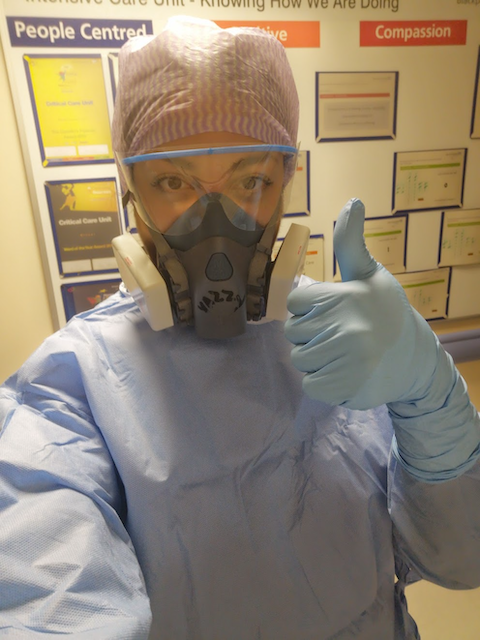
The question (as your aunt) I most want to ask is DO YOU HAVE ENOUGH PPE? However, I’ll rephrase it and try to be less biased. You’ve worked abroad since qualifying, in Africa. What were you doing out there? Has your time in a different country with very few resources helped you in your current role? Do you think it changed your attitude to medicine/NHS?
Definitely! I loved my time in Zambia, it was one the best things I ever did both personally and professionally (although almost every consultant I spoke to before I went seemed perplexed as to why on earth I would take time out of training to volunteer in a resource-poor hospital with no pay and no support, doing something that would earn me no points on my specialist application form). The hospital I was working in was in one of the most rural parts of the country, our patient population didn’t have access to electricity, running water or in some cases even a toilet. My hospital often ran out of essential medications and supplies and even when we were fully stocked we did not have all the medicine listed on the WHO checklist of essential medicines. It was a real challenge.
This ability to adapt, think laterally and keep my composure in a chaotic situation has definitely helped in the COVID crisis. We haven’t yet run into any situation were we have been completely unable to get certain things, but many stocks are running low. So where we can we are using alternative solutions to preserve supplies for the cases where alternatives are not feasible. In Zambia we didn’t get warnings that stocks were running low, they would just be gone one day, so this situation is much easier to handle in comparison.
One of the nicest things about working in Zambia was how grateful the patients were for what little medical care you could give them. Just listening to their history and acknowledging they were ill, even if you couldn’t help, they would be so grateful that you had taken the time to see them. I never felt gratitude like that from the NHS. I mostly just felt like a replaceable unit. If I wasn’t doing the job someone else would be doing it and probably better than I could. Of course you get the occasional patient thanking you for the help you gave them, but more often they were annoyed at being in hospital in the first place, overwhelmed with the ever increasingly complex system of the NHS and frustrated at the long time delays they would inevitably have to experience. Gratitude would be low on their list of emotions. But since the COVID outbreak there has been a huge change. The public have shown this incredible outpouring of gratitude and love towards us, consultants and seniors are much more acutely aware of the wellbeing of their junior staff and each other. I even had one of the chief executives of my hospital pop by the ICU on his lunch break to make sure we were all coping. It’s definitely helped me get through some of my more challenging shifts. You can’t underestimate how important it is to feel valued.
Managing Stress as an NHS Doctor
How do you manage the inevitable stress of what you’re doing now? What gives you a lift?
I’m very lucky, I work with some amazing junior doctors and we have all been very supportive with each other and look out for each other on shift. There’s a lot of dark humour in our group which does really help to lighten the mood and take the seriousness out of a situation, just long enough that you can catch your breath before delving back into it. With the lock down many of my stress relieving activities have been taken away. I used to go to a female only aerial sports gym which not only was great exercise but provided me with a fantastic network of supportive, empowered females from all different walks of life. Classes often turned into an informal therapy session.
Since the lock down I have been very active in my garden. I’m not really sure what I’m doing in the garden, but I view that as part of the fun. (Yazzie is a member of our WhatsApp gardening group where everyone else is over 60. She is actually a much better gardener than she thinks she is and keeps us on our toes.)
What advice would you give someone thinking of having a career in medicine?
Well, once I’d told them to run a mile from the idea, that they can earn twice as much for half the hours as a dentist, that they could live a much more interesting and easy life working in media with actual work benefits and boozy lunch breaks placed on the company card. If after all that they still wanted to know how to get into medicine, I would probably tell them that medicine is a life long career that demands commitment, repeatedly. It starts on entry, showing you’re able to commit for months at a time to volunteering on a ward or in a care home. It continues in medical school with signing up to extra classes and courses on areas you are hopefully to specialise. Once you start working the real commitment begins with postgraduate exams, journal clubs, conferences, poster presentation, quality improvement projects, audits. All to be done in your own time, once you’re actually able to get away from the wards and the never ending work load. If you can commit to it though, it promises you a life long job, providing an invaluable service to your community and to the individual people you will care for along the way.
It’s a real privilege to have complete strangers literally trust you with their life and reveal their deepest darkest secrets to you in the hope that you can fix them and make everything better again.
When I was younger hardly any girls got into medicine. Do you see any signs of that old discrimination still, or is it a pretty equal profession, in your experience?
Currently there are more females than males entering medical school and its been that way for some time now. Depending on what speciality you go to you will see a widely different gender profile. In emergency medicine and intensive care, from my experience, it is still a very heavily male dominated area. In my current hospital there are no female consultants on the specialist register for emergency medicine, and only 1 for intensive care. But then both of these specialities are very family unfriendly specialties, with lots of on calls, night and weekend shifts even for the consultants.
In general practice, for example, there are now more female doctors than male. I think its doubtful that the acute specialties will ever see equality in the gender ratio, as fundamentally men and woman on average have different priorities and requirements when it comes to work, and the acute specialties tend to be more appealing to the male point of view. That being said they are definitely not hostile to women and with positive discrimination you can use this to your advantage in the long run.
If you could choose a different career, anything, what would it be? This is a hard one. I love medicine and feel so incredibly fortunate that I get to practice it each day. That being said, working as a holiday reviewer for a travel guide sounds like it would be a lot more fun than medicine!
Well, my darling girl, you certainly deserve a holiday after this wee stint.
And that goes to all the hardworking staff in every area of the NHS and to all essential workers everywhere. We salute you and we thank you!
RenewYou, My Tried and Tested Career Booster!
RenewYou has helped thousands of women make positive and lasting change in their lives. I deliver it one-to-one as part of a bespoke coaching package for women looking to move into leadership, to progress their career, or who wish to be the absolute best version of themselves.

Posted on April 24th, 2020 by Jane


